

Personal safety plan is a practical approach to minimizing risk and staying prepared in unpredictable situations. Whether you travel alone, commute in urban areas, or want peace of mind at home, a strong personal safety plan is not just for emergencies—it’s for everyday confidence.
Key Takeaways
- A personal safety plan keeps you prepared for unexpected risks in daily life, travel, or emergencies.
- Step-by-step planning lowers anxiety and boosts situational awareness during stressful moments.
- Integrating smart tools like GPS sprays, safety apps, and discreet devices makes your plan more effective.
- What Is a Personal Safety Plan & Why Should You Have One?
- How to Create a Personal Safety Plan: Step-by-Step
- Advanced Analysis & Common Pitfalls
- Conclusion: Getting Started with Your Personal Safety Plan
- FAQ
What Is a Personal Safety Plan & Why Should You Have One?
A personal safety plan is a prepared list of actions, contacts, and resources tailored to help you respond fast and confidently if you face a threat or feel unsafe. Most people associate the term with self-defense or escaping abusive environments, but a personal safety plan can also lower daily stress, help you spot early warning signs, and ensure you know what to do before things escalate.

Many safety plans focus on suicide prevention for mental health crises. For example, digital safety plans delivered through mental health apps have shown success in reducing emergency department visits for suicidal behavior (source). Others are designed for emergencies after screening for suicide risk in primary care (source). But a personal safety plan goes further, covering risks from stalking, commuting alone, domestic violence, travel safety, and even protecting your privacy in hotels and Airbnbs.
With global uncertainty and new security challenges, planning ahead is vital. As technology advances, integrating smart tools—like a connected self-defense spray or predictive safety apps—is fast becoming a best practice.
How to Create a Personal Safety Plan: Step-by-Step
Building an actionable personal safety plan does not have to be complicated. Here’s a step-by-step breakdown you can tailor to your situation:
- Identify Your Top Risks: List the scenarios you are most concerned about—night walks, rideshare rides, abusive partners, unwanted following, or travel to unfamiliar places. Use the night walking safety tips as a blueprint for urban anxiety.
- Map Escape Routes & Safe Locations: Know exits and safe zones, both at home and while commuting. In hotels or rentals, check for privacy risks using a hidden camera detection app—a common protection for solo travelers.
- Pre-load Emergency Contacts: Save local emergency numbers, trusted friends, legal advisors, and crisis hotlines in your phone and write them down somewhere easily accessible.
- Equip Everyday Carry Items: Don’t just rely on apps—carry physical tools, like a SABRE smart spray with SOS location alerts or safety jewelry that blends into professional environments.
- Practice Your Response: Rehearse how you will act in danger. Can you leave quickly? Will you use a fake phone call, discrete code with friends, or an “always-on” anti-stalking app like the AirTag scan detect & tracker app?
- Backup Documentation: Keep copies of ID, medical info, and key documents either with a trusted person or stored digitally, encrypted for privacy.
- Tech Integration: Activate smart features in your devices. Many new autonomous safety alert apps detect threats and send help even if you can’t touch your phone.
- Review & Update Regularly: Circumstances change—move cities, change jobs, start new relationships. Keep your plan fresh.
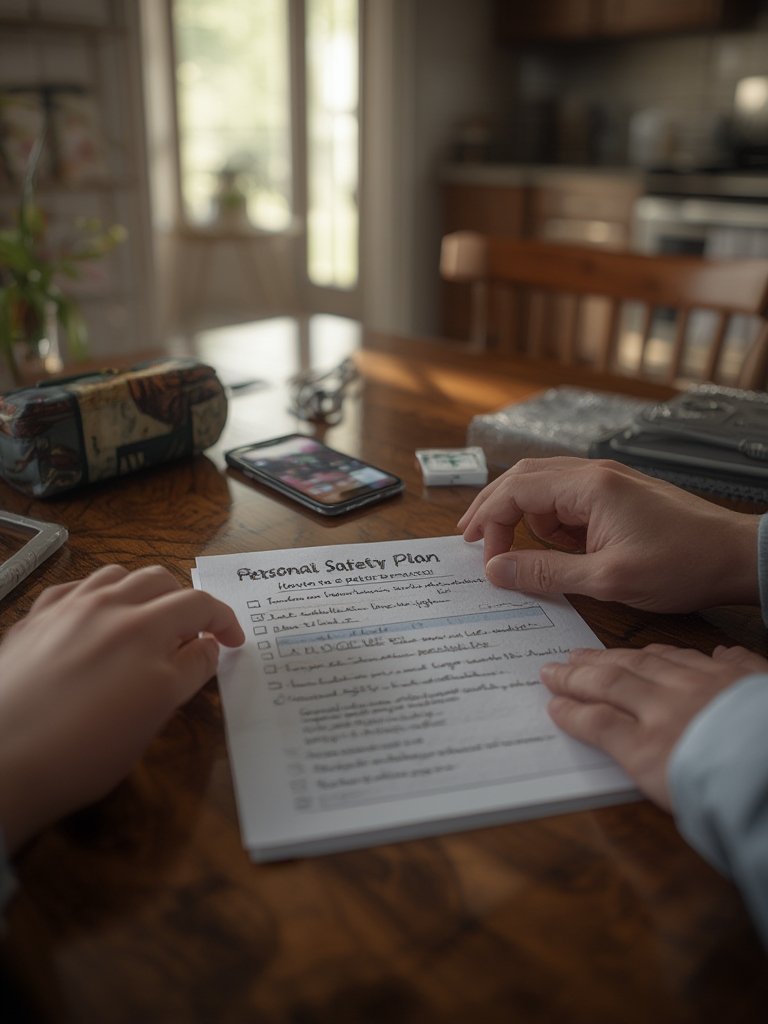
Even basic precautions can make a huge difference. Some smart devices, like urban commuter gloves or safety jewelry, can deter opportunistic threats and help you feel in control.
Advanced Analysis & Common Pitfalls
No plan is perfect. Let’s break down where people stumble—and how you can avoid the most common mistakes.
- Over-Reliance on Technology: Apps and devices are powerful, but batteries die, signals drop, and not every emergency allows you to use a phone. Pair digital tools with analog methods—like memorized codes or low-key gear.
- Failure to Practice: Knowing what to do isn’t enough—muscle memory counts. Too many people freeze in the moment because they never rehearsed their response.
- Outdated Plans: As your life changes, threats shift. A yearly review is not enough. Make it routine—especially after moving, relationship changes, or significant events.
- Legal Missteps: Not every self-defense tool is legal everywhere. Check local laws before carrying devices like pepper spray or stun guns. For guidance, see the pepper spray legality guide.
- Ignoring Mental Health Angles: If you have a history of anxiety or trauma, combine physical plans with techniques from clinical safety plans. Digital plans to reduce suicidal crises can be effective (source), and safe routines do double duty for overall wellness.
| Common Pitfall | Impact | How to Avoid |
|---|---|---|
| Relying only on apps | Apps can fail due to dead battery, poor connectivity, or being taken away from you. | Develop backup manual signals and methods, like code words and safe spots. |
| Never rehearsing plan | Panic or freezing up during real threats; confusion among support contacts. | Practice scenarios with friends or solo—simulate emergencies to build confidence. |
| Ignorance of local laws | Legal trouble, confiscation of tools, or extra risk if you break regulations. | Check local and state rules for all personal safety tools and strategies. |
| Ignoring new tech risks | Tech-enabled stalking, hidden cameras, and trackers are on the rise. | Use anti-tracking apps and hidden camera detectors—especially in rentals. |
Multiple studies show that safety planning is most effective when personalized—not a “one size fits all” process (source).

Conclusion: Getting Started with Your Personal Safety Plan
A practical personal safety plan is about more than just worst-case scenarios—it builds everyday confidence and preparedness. Assess your risks, choose tools and strategies you actually use, and review your plan regularly. With new smart devices and apps, you have more options than ever before.
Take your first step now: map your most likely risks and create your own personal safety plan. For extra tips, check our guides on safe travel and nomadic security kits.
FAQ
What should a personal safety plan include?
It should contain emergency contacts, mapped escape routes, pre-packed essentials, safe word codes, backup documentation, and practical everyday carry items like a smart pepper spray or safety jewelry.
How often should I update my personal safety plan?
Update your plan at least every three to six months, or immediately after major life changes—such as moving, ending a relationship, starting a new job, or travel to an unfamiliar area.
Can apps and tech replace traditional personal safety methods?
No. Tech can boost your safety, but batteries fail and tech can be taken away. Use a layered approach: combine apps and devices with offline methods, code words, and escape routines.
What’s the best self-defense device for daily carry?
It depends on your situation and local laws. Many prefer a discreet keychain tool or smart jewelry for everyday carry. Check legality in your state or country before purchasing, especially for sprays or stun guns.
How do I protect myself from tech-enabled stalking?
Scan your environment regularly with hidden camera or AirTag detector apps. Stay cautious with new people sharing your location or access to your tech and regularly review device privacy settings.
[…] Build a Mental Safety Plan Know your system’s security policies, nearest exits, and reporting methods before you ride. Getting caught unaware is the biggest risk. If you want a full strategy, see our Personal Safety Plan Guide. […]