
How to find safe accommodation when traveling is one of the most important decisions you’ll face—no matter if you stay in a hotel or short-term rental. Booking the wrong place can risk your privacy, health, and belongings. This guide cuts through hype and teaches step-by-step checks you can actually use, even when official data is patchy or unclear.
Key Takeaways
- There is no universal safety standard for hotels and Airbnbs in 2024—self-vetting is critical.
- Top risks include hidden cameras, lack of working smoke/CO alarms, and incomplete identity verification.
- Use actionable inspection checklists, communicate with hosts or hotels, and prioritize places with transparent reviews and safety features.
- Quick reality check — what the data does and doesn’t tell you
- Step-by-step: How to find safe accommodation when traveling
- Advanced analysis & common pitfalls: Hotel versus Airbnb safety
- Conclusion: Key safety rules in plain English
- FAQ: Accommodation safety when traveling
Quick reality check — what the data does and doesn’t tell you
When it comes to finding safe accommodation when traveling, platform claims and reality look different. According to Airbnb’s own 2024 statements, less than 0.1% of all stays globally resulted in any safety reports. But user complaints, news stories, and court records show real risks. For example, from 2013 to 2023, Airbnb logged 35,000 support tickets related to hidden cameras or audio recorders [CNN investigation]. Carbon monoxide is another real threat: 19 recorded fatalities at Airbnb properties from CO poisoning over the same decade [Rhode Island Commission PDF]. Importantly, there is no apples-to-apples global data that compares hotel versus Airbnb traveler incidents in 2024. This is why personal, checklist-based vetting still matters.
Step-by-step: How to find safe accommodation when traveling
Here’s a practical, evidence-backed approach for choosing and checking accommodation safety, regardless of what or where you book.
-
Research the property and host (or hotel brand):
- Check recent reviews, looking for mentions of “safety,” “locks,” “alarms,” or “surveillance.” On Airbnb, scroll past the first 10 to spot patterns or negative clusters.
- Verify host/seller identity badges and check for government registration. For hotels, look up the operator’s reputation and hotel security reviews for the region.
- Review all photos for missing window coverings, odd objects (possible cameras), and visible alarms.
-
Communicate for confirmation:
- Message the host or front desk with a specific question: “Can you confirm that there is a working smoke and CO detector in the unit? Are there any cameras on the property?” Save the response as proof.
- For Airbnbs, ask about emergency/24-hour contacts and get the procedure before arrival.
-
Assess platform safety features and gaps:
- On Airbnb, nearly all US bookings (97.9%) have both parties verified—globally, it’s 75%. Still, some hosts/guests are not verified. For riskier destinations, prioritize verified hosts or managed properties.
- No platform provides independent third-party property audits, so use reviews, host messaging, and government safety registries where available.
-
Pack and use your own safety gear:
- Bring a portable travel door lock and/or a door alarm for added room security—especially for unfamiliar hotels or rentals.
- Carry a camera detector app or basic RF detector, and a portable CO/smoke alarm.
-
Perform an on-arrival in-room safety check:
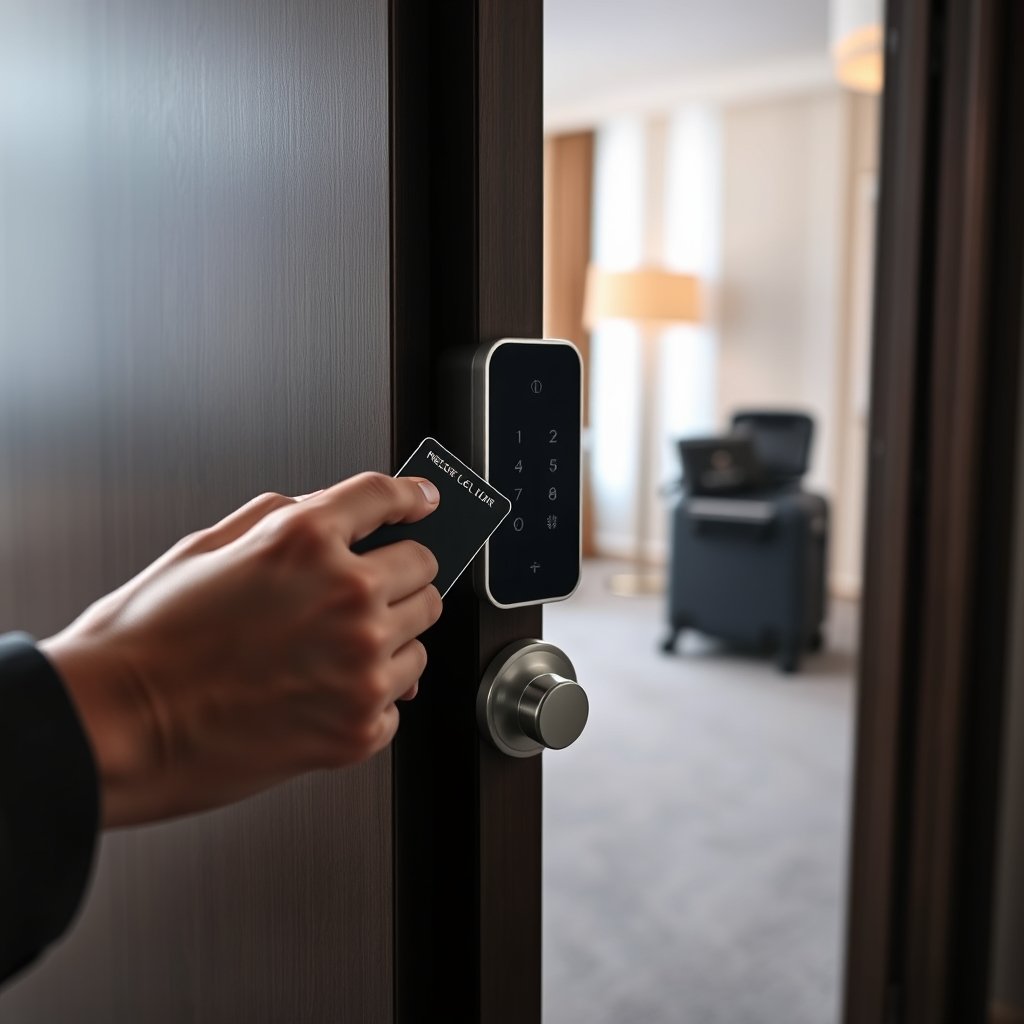
- Test all doors and windows; confirm they lock securely and release easily.
- Do a visual sweep for out-of-place electronics or blinking lights; scan for lenses using your phone flashlight and infrared camera app.
- Locate exit routes and emergency contacts.
- Take photos of any damage, missing safety equipment, or suspected cameras and file them to the platform or front desk ASAP.
For more details, check specialized resources like our travel safety checklist and this focused solo female travel safety kit.
Advanced analysis & common pitfalls: Hotel versus Airbnb safety
Choosing between a hotel and an Airbnb often comes down to protocols, but both have gaps. Here’s what the research and policies say in 2024.
| Airbnb | Hotels | |
| Camera Rules | Global indoor camera ban; 35,000 support tickets (2013–23) for hidden cameras; exterior cameras allowed with disclosure | No global standard; many have public area CCTV; in-room surveillance not permitted by brand, but rare rogue incidents can occur |
| Smoke/CO Alarms | Platform requirement but not universally enforced or third-party audited; 19 Airbnb CO deaths (2013–23) | Varies by country/brand; top brands require working alarms, but budget hotels may not meet best practices |
| Identity Verification | 75% of global bookings with both host/guest verified (97.9% US); can be bypassed via loopholes (shared accounts) | ID checked at check-in; staff presence; some local verification, but rarely selfie or biometric checks |
| 24/7 On-Site Support | No; remote host contact and platform 24-hour “safety line” | Front desk and/or security on duty in most hotels |
| Third-party Safety Audits | No public, independent property audit platform in 2024 | No global third-party public standard; professional hotel audits exist for top chains but aren’t guest-accessible or public |
Common pitfalls:
- Trusting platform “safety ratings” without personal checks. Official stats (like “less than 0.1% incidents”) are helpful but don’t reflect under-reporting or local risk.
- Skipping camera sweeps. Hidden cameras are a top short-term rental risk; don’t assume a ban means zero threat (read the latest news cases).
- Assuming all rooms have CO/smoke detectors. “Required” does not mean “present and working.” Especially for older properties or private rentals.
- Ignoring the value of verified hosts/hotels. Non-verified hosts, “ghost” listings, or new hosts lack accountability and increase risk. For hotels, stay with established brands in unfamiliar destinations.
- Not checking emergency contacts and exits on arrival. US Airbnb users have higher verification rates, but guests everywhere should still ask about emergency contact protocols.
When in doubt, consult additional advice for how to stay safe in a hotel or get up-to-date Airbnb safety tips.
Conclusion: Key safety rules in plain English
There’s no perfect guarantee, but these plain rules help you reduce risk every time you decide how to find safe accommodation when traveling:
- Favor managed hotels or verified/hosted rentals for high-risk regions or solo/family trips.
- Before booking, confirm working smoke/CO alarms and no indoor surveillance devices—when in doubt, ask directly and get it in writing.
- Upon arrival, do a physical sweep: check locks, windows, alarms, emergency exits, and use your own detectors if needed.
- Trust your instincts—if something feels off or unsafe, leave and report the property immediately using platform or hotel escalation contacts.
Ready for your next trip? Download the pre-book and arrival checklists, use them before every stay, and always put safety first. For even more up-to-date tips and gear, explore our best travel security products guide.
FAQ: Accommodation safety when traveling
How do I quickly check for hidden cameras in an Airbnb or hotel?
Do a slow visual sweep for small lenses (especially in clocks, smoke detectors, power strips). Use your phone flashlight and a dedicated hidden camera detector app. For maximum certainty, an RF detector can find broadcasting devices. For more info, read our hidden camera room check guide.
What should I do if my room lacks a working smoke or carbon monoxide alarm?
Notify the front desk or host immediately and request a new room or a replacement alarm. Never sleep in a room without both alarms—if unresolved, find alternate accommodation. Carrying your own portable CO alarm is a smart safety habit.
Are Airbnbs generally less safe than hotels?
The data is incomplete—there’s no global, direct comparison. Hotels often have more onsite staff and security protocols, but both hotels and Airbnbs can lack proper alarms or be affected by surveillance issues. Your vetting process is essential in both cases.
How much more does it cost to book accommodation with better safety standards?
There’s no hard data linking price to safety level, but you’ll often pay a small premium for managed hotels, verified hosts, or properties with professional safety gear. Consider it an investment in your own peace of mind.
Can I find third-party safety reviews or audits for hotels or Airbnbs?
As of 2024, there is no widely-used public platform for independent safety audits of hotels or individual Airbnb properties. Rely on platform newsroom pages, consumer investigations, and your own checklist to assess safety features before booking.