
Road trip safety gadgets aren’t just “nice to have”—they’re a must if you want to avoid breakdowns, long waits for help, or being caught off guard when traveling alone. If you drive solo or in small groups and want gear that pays for itself in stress saved and risks reduced, you’re in exactly the right place.
Key Takeaways
- Good road trip safety gadgets help prevent emergencies and keep you self-reliant, not stranded.
- Buy compact, easy-to-use gear designed for solo deployment—don’t just trust bundled kits or unproven brands.
- A robust kit costs $140–$600, but can save hours, reduce repair bills, and boost your confidence on every trip.
- Why road trip safety gadgets matter — the practical case
- Most common road-trip risks gadgets can address
- Pain points and complaints from users — what to avoid when buying
- Proven categories of gear that work in real incidents
- The top 10 road trip safety gadgets to buy in 2024 (product roundup)
- Three underrated or overlooked safety gadgets forums keep talking about
- Price ranges and what you should expect to pay (budget to premium)
- New tech and features introduced in 2023–2024 that improve safety
- Official guidance for solo road trip safety — what AAA, NHTSA, etc., recommend
- How to assemble, store, and maintain your solo-road-trip safety kit
- Quick buyer’s checklist — choose the right gadget in 5 questions
Why road trip safety gadgets matter — the practical case
According to the NHTSA, distracted driving alone claimed 3,208 lives in 2024. While most people know not to text and drive, far fewer invest in gear that can actually prevent (or reduce the impact of) emergencies: battery failures, flat tires, or being stranded far from help. The reality is, most breakdowns are preventable, or at least manageable, with the right tools on board.
Don’t treat road trip safety gadgets as add-ons—see them as “insurance” for your time, stress, and safety. If you’re traveling alone or drive long distances, these investments often pay off the first time you avoid a tow, handle a minor roadside fix, or keep connected when the unexpected hits.
Most common road-trip risks gadgets can address
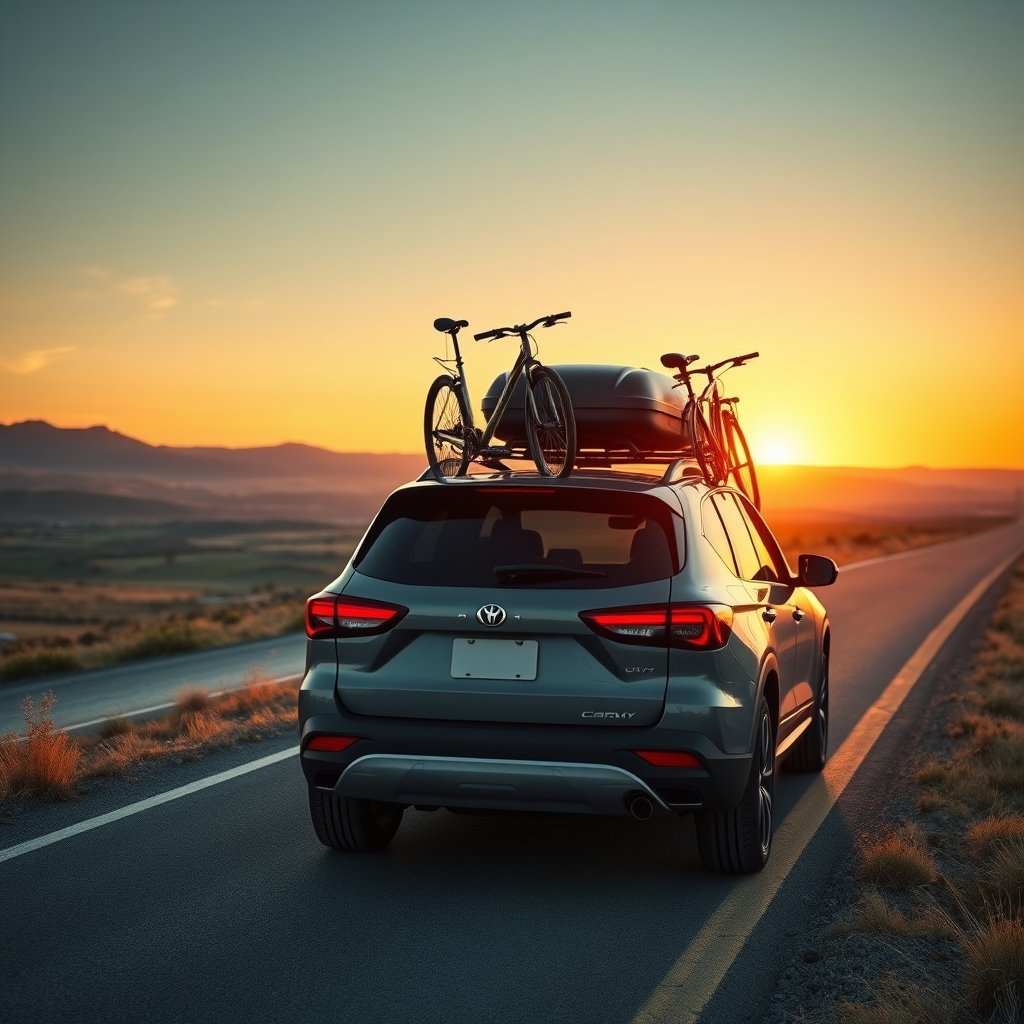
No comprehensive public data breaks down road trip emergencies by gadget-preventable outcome, but expert advice—from AAA, mechanics, and experienced travelers—points to seven major threats you can mitigate directly with car travel safety tools:
- Battery failure: Portable jump starters let you self-recover from a dead battery, especially important for solo trips.
- Flat tires: Compact 12V air compressors and tire repair kits prevent long roadside waits.
- Minor collisions: Dash cams with emergency features provide proof and speed up insurance claims.
- Stranded due to breakdown: Multi-function emergency kits, portable power banks, and satellite messengers keep you connected and supplied.
- Medical incidents: Upgraded first aid kits help you treat wounds, allergic reactions, or heat exhaustion until help arrives.
- Poor visibility: High-vis LED beacons replace awkward road flares for warning others if you’re stopped.
- Personal security: Solo travelers need gadgets they can use one-handed, whether it’s cutting yourself out of a jammed seatbelt or signaling for help.
Evidence gap: No recent studies quantify gadget effectiveness per incident. For breakdown and crash rates, see AAA’s roadside assistance statistics and NHTSA.
Pain points and complaints from users — what to avoid when buying
User frustrations pile up in product reviews and travel forums. While hard data is lacking, common complaints include:
- Complex gadgets: Too many buttons or vague directions make gear useless under stress.
- Short battery life: Jump starters and beacons that die when you need them most—avoid NiMH or unknown-brand cells.
- Bulky or heavy: Large items are rarely packed by solo travelers in compact cars.
- False alarms: Overly sensitive security tools cause embarrassment or drain batteries.
- Poor quality or missing support: Cheap kits might break on first use, and some brands are impossible to reach for replacement parts.
- Solo deployment issues: Some jacks, fire extinguishers, or multi-tool kits require two hands or brute force—bad news in a real emergency.
Users on Reddit’s r/roadtrip echo these issues, emphasizing ease of one-handed use and rapid deployment for true solo travel safety.
| Pitfall | Why It’s a Problem | What to Look For |
|---|---|---|
| Complicated setup | Lost time and higher stress in emergencies | Single-switch or auto-deploy design |
| Poor instructions | Mistakes on first use, improper deployment | Clear diagrams, QR code video guides |
| No solo-use option | Useless if traveling alone | See “one-handed use” claims or demo videos |
| Cheap batteries | Failure at critical moment | LiFePO4 or brand-name lithium cells |
| Support/warranty issues | No help if product fails | Brands with phone/chat support, clear warranty |
Proven categories of gear that work in real incidents
Even without centralized data, real-world reports, mechanic recommendations, and verified reviews highlight these categories as consistently reliable for car travel safety tools and road trip security gear:
-
Portable jump starters:
Pros: Self-recover from battery issues, no second vehicle needed.
Cons: Low-quality models die after one season.
Spec to check: Look for LiFePO4 batteries, 1000+ peak cranking amps. -
Tire repair/inflator kits:
Pros: Fix a flat in 15 minutes or less, pump up slow leaks.
Cons: Cheap compressors overheat or break quickly.
Spec to check: Minimum 30+ PSI rating, all-in-one with plugs/sealant. -
Emergency multi-tools:
Pros: Break glass, cut seatbelt, doubles as flashlight or whistle.
Cons: Hard to access or too bulky.
Spec to check: Metal-ceramic tip, seatbelt blade, waterproofing. -
LED safety beacons:
Pros: Visible miles away, safer than flares, reusable.
Cons: Poor models are dim or unreliable.
Spec to check: 360° visibility, magnetic base, high-lumen output. -
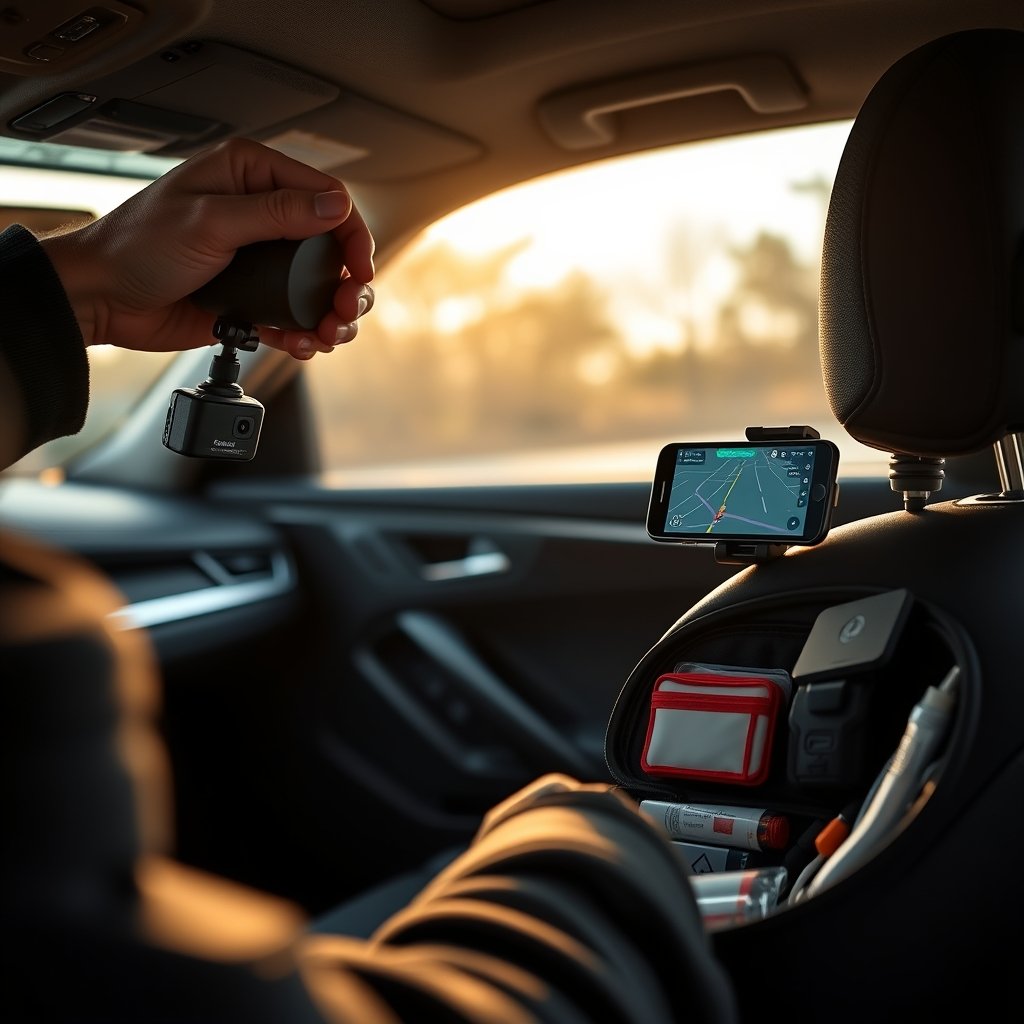
Dash cameras:
Pros: Instant emergency recording, send footage to cloud, prove fault.
Cons: Some require hardwiring or app setup.
Spec to check: G-force sensor emergency save, app-based upload. -
Portable power stations:
Pros: Recharge phones, USB-C laptops, or medical equipment off-grid.
Cons: Weight and space if oversized.
Spec to check: At least 200Wh, AC + DC output. -
Compact fire extinguishers:
Pros: Stops electrical/engine fires before they spread.
Cons: Some types don’t work on vehicle fires—stick to UL-rated for cars.
Spec to check: UL rating 5-B:C, quick-release mount.
Want more travel safety solutions for solo trips? Check out our guide on solo female travel safety gadgets for compact self-defense and hotel devices.
The top 10 road trip safety gadgets to buy in 2024 (product roundup)
-
Portable Jump Starter
Why buy: Self-rescue from battery failure anywhere.
Must-have spec: LiFePO4 cells, 1200+ amps.
Budget: NOCO Boost Plus GB40 ($99).
Premium: NEXPOW 2000A LiFePO4 ($149). -
12V Air Compressor and Tire Repair Kit
Why buy: Fix flats or top up pressure quickly.
Must-have spec: 35+ PSI, auto shutoff.
Budget: EPAuto 12V DC Portable ($39).
Premium: VIAIR 85P ($99) with Slime repair kit ($18). -
Multi-function Emergency Tool (Glass Breaker/Seatbelt Cutter)
Why buy: Escape quickly after a crash.
Must-have spec: Steel tip, visible handle.
Budget: Resqme Keychain ($10).
Premium: Stinger Ztylus ($19). -
LED Road Flare / Triangle Alternative
Why buy: High visibility, no fire risk.
Must-have spec: Waterproof, magnetic base.
Budget: HOKENA LED Beacons (set of 3, $24).
Premium: Gear Gurus Pro Pack (set of 6, $59). -
Compact Power Bank / Solar Charger
Why buy: Charge phone or GPS if power fails.
Must-have spec: 10,000+mAh, pass-through charging.
Budget: Anker PowerCore ($21).
Premium: BigBlue Solar Bank ($49). -
Handheld CB/Radio or Satellite Messenger
Why buy: No cell? Stay in touch or call SOS.
Must-have spec: NOAA alerts, satellite SOS (premium).
Budget: Midland 75-822 CB ($99).
Premium: Garmin inReach Mini 2 ($299). -
Solo Traveler First Aid Kit
Why buy: Tailored supplies for minor wounds to allergy care.
Must-have spec: CPR mask, trauma pads, allergy meds.
Budget: Adventure Medical Kits Solo ($24).
Premium: MyMedic Solo ($79). -
Dash Camera (with Emergency Features)
Why buy: Evidence on accidents, break-ins.
Must-have spec: G-sensor, cloud upload.
Budget: Vantrue N1 Pro Mini ($79).
Premium: Nextbase 522GW ($199). -
Compact Fire Extinguisher (Car-rated)
Why buy: Stop small fires fast.
Must-have spec: UL 5 B:C rating, quick release.
Budget: First Alert AUTO5 ($19).
Premium: Element E50 ($89). -
Insulated Emergency Blanket/Poncho
Why buy: Prevent hypothermia if stranded.
Must-have spec: Compact, waterproof.
Budget: Swiss Safe Mylar ($11/4 pack).
Premium: Go Time Gear Life Poncho ($19).
For travel security beyond the car, see our expert picks for best travel security products (door alarms, RFID wallets, personal alarms).
Three underrated or overlooked safety gadgets forums keep talking about
-
Personal Locator Beacon or Satellite SOS Device
Why overlooked: Seen as overkill, but countless first-person stories show they can be lifesaving when no cell signal is available.
Example: ACR ResQLink ($289, recurring praise on Adventure Rider forums). -
Bluetooth Tire Pressure Monitoring System (TPMS)
Why overlooked: Car TPMS warning lights lag—Bluetooth options send instant phone alerts. Real user report on Reddit, Feb 2024 (“saved our trip, caught slow leak before flat!”).
Example: GUTA Wireless TPMS ($79). -
Magnetic Quick-Release Fire Extinguisher Mount
Why overlooked: Basic extinguishers are often mounted under seats and hard to reach. Quick-release options praised in overland forums for fast access during fires.
Example: JACO Quick Release Mount ($32).
For even more niche personal security upgrades (like GPS-tracking pepper spray or agentic AI safety apps), see our coverage on connected self defense and AI safety gear.
Price ranges and what you should expect to pay (budget to premium)
No published source lists average price bands for car travel safety tools as of 2024. Based on Amazon, Walmart, and REI market checks as of May 2024, here’s what to budget:
- Jump starter: $75 (budget), $120 (mid), $180+ (premium LiFePO4)
- Compressor/repair kit: $40/$60/$130+
- Multi-tool/emergency: $10/$19/$30+
- LED beacon/flares: $25/$35/$65+
- Dash camera: $69/$139/$225+
- Fire extinguisher: $18/$25/$85+
- First aid/solo kit: $23/$44/$82+
- Satellite messenger: $129 (older)/$299+ (current)
- Power bank: $21/$42/$100+
- Emergency blanket/poncho: $10/$16/$25+
Sample “solo traveler kit” cost (mid-range): About $280–$350 for all 10 essentials, plus $25/year to replace expired items and rechargeables.
Budget products suffice for most, but premium models add warranty, ruggedness, and faster recharge times. For buyers seeking the absolute best ROI, see our best travel safety gadgets under $30 roundup for value picks.
New tech and features introduced in 2023–2024 that improve safety
- LiFePO4 Jump Starters: Now standard in premium models—longer battery life, more cold-start reliability, improved safety circuitry.
- Dash cams with AI-based emergency detection: Auto-upload accident footage to the cloud; some call emergency contacts automatically.
- Hybrid satellite-cellular messengers: New compact models automatically switch to satellite SOS if cell drops—a leap for remote coverage.
- LED beacons with SOS and magnetic bases: Flash in multiple patterns, stick instantly to any metal on your vehicle.
- Smart power banks: USB-C PD fast charging and pass-through tech lets you operate devices while recharging the pack itself.
Always check direct from manufacturer release notes and FCC filings for real-time details on capabilities and specs.
Official guidance for solo road trip safety — what AAA, NHTSA, etc., recommend
The NHTSA explicitly warns never to text, dial, or use your phone for navigation while driving, noting 3,208 lives lost to distracted driving in 2024. They urge drivers to keep phones out of reach, pre-program navigation, and pull over to respond to messages. AAA recommends:
- Carrying a first aid kit, flashlight, and roadside warning device (flares/LED triangles).
- Checking tire, fluid, battery, and emergency kit status before every long trip.
- Having an emergency contact card and power bank for phone charging.
- Considering a GPS or satellite messenger for remote-area travel.
Gadgets support, but never replace, safe driving and trip prep. For deeper solo travel security, read these essential safety tips for solo travelers.
How to assemble, store, and maintain your solo-road-trip safety kit
Packing Checklist (Solo-Friendly):
- Compact jump starter and charger cord
- Plug-in compressor + tire repair tools
- LED beacon / triangle kit
- Multi-style escape tool
- Fire extinguisher (quick mount, not under seat)
- Power bank (test before leaving home)
- First aid kit with solo essentials
- Dash cam (with backup power or hardwire kit)
- Blanket/poncho (waterproof bag)
- Satellite SOS device or radio (in glovebox)
Storage Tips:
- Group primary gadgets in a top-handle, soft kit bag (5-10L dry bag fits most compact cars).
- Mount fire extinguishers and triangle/beacons within arm’s reach of the driver’s seat.
- Backup keys, contacts, and a quick-use first aid pack should be kept inside reach—even in a crash.
Maintenance Schedule:
- Charge power banks/jump starters monthly. Test LED beacons and dash cam before each trip.
- Check first aid kits for expired meds and replace fire extinguishers according to date codes.
- Run a self-test: Practice inflating a tire and using your escape tool outside the car to build muscle memory.
For a complete visual safety checklist, download our one-page solo traveler kit checklist.
Quick buyer’s checklist — choose the right gadget in 5 questions
- What single risk am I most likely to face on my planned route (dead battery, flat tire, no cell signal)?
- Can I realistically use or deploy this piece of gear solo, under stress?
- Is it compatible with my vehicle’s systems (12V, tire valve type, USB-C support)?
- What is the required maintenance or battery check interval?
- Does the brand offer reliable customer support and a real warranty?
Compare three top-rated products in each category before you buy. For comprehensive road trip security gear comparisons, explore our door jammer and personal alarm reviews as well.
Next step: Bookmark this page, subscribe for updated 2024 price roundups, and always build your own compact road trip kit before every long journey.
Road Trip Safety Gadgets: FAQ
Are road trip safety gadgets really worth the investment?
Yes—having reliable, user-friendly safety gear can eliminate towing costs, cut wait times for help, and give you direct control in emergencies. One dead battery or flat tire fix pays for many gadgets in saved time and stress.
What’s the bare minimum kit for solo drivers?
A jump starter, tire repair/inflator kit, LED beacon, first aid kit, and multi-function escape tool form the “must have” core—these alone will handle >90% of the most common road trip setbacks.
Can I trust cheap, no-brand safety gadgets?
Usually not. Many fail quickly, lack customer support, or have unclear instructions. Prioritize recognized brands and check reviews mentioning real-world emergency use before buying.
How often should I check or replace my gear?
Recharge batteries and test electronics monthly (or at least before every trip). Replace expired first aid items and fire extinguishers by stamped dates. Practice deploying every tool so it’s second nature.
Do safety gadgets replace the need for roadside assistance membership?
No. They complement it—gadgets let you solve minor problems on your own, while membership covers major breakdowns you can’t handle. Both are wise for long solo road trips.