
womens solo travel safety guide is more than just a checklist—it’s a data-aware, practical system for independent women who want real answers, not recycled “just be careful” tips. If you’re planning a trip and refuse to compromise on safety or adventure, you’ll find clear data, gear picks, and strategies here—with plain English about where the gaps and risks really are.
Key Takeaways
- There is no reliable source for incident rates specific to solo female travelers, but evidence highlights clear safety concerns, priorities, and ways to reduce risk.
- Compact essential gear like a power bank, door alarm, and anti-theft bag—paired with behavioral strategies—offer concrete benefits for women’s solo travel safety.
- Gaps in research (such as product rankings and incident stats) mean every traveler should double-check prices, country contacts, and latest user reviews before going.
- Quick snapshot — what the research actually says (and what it doesn’t)
- Step-by-step guide to solo travel safety (checklists, gear, strategies)
- Advanced analysis & common pitfalls (what to expect, real challenges)
- Conclusion: Your move
- FAQ — Womens Solo Travel Safety Guide
Quick snapshot — what the research actually says (and what it doesn’t)
When it comes to solo travel safety women often search for facts and numbers, but as of 2023–2024, no reliable public data tracks the actual incident rates for solo female travelers—globally or in any major region. Instead, what we do know comes from surveys and safety indices that focus on risk perception, traveler priorities, and destination “safety rankings.”
This means that practical advice for this womens solo travel safety guide is built on a mix of firsthand traveler surveys, expert government guidance, and reviews of recent gear and checklists—not on hard stats about real-world incident rates. Where something is editorial opinion or lacks research, it’s flagged. This is important, because not all risk is created equal—and not all advice is actually tested by real travelers.

For Elena (and anyone who wants independent, mid-budget safety), the absence of raw numbers doesn’t mean you’re left unprepared. Instead, focus on what works: direct user reports, the best expert sources, and replicable checklists—even if every last data gap can’t be closed yet.
Step-by-step guide to solo travel safety (checklists, gear, strategies)
Priorities Women Actually Report: Survey Data in 2024
Understanding solo travel safety for women starts by naming what most travelers fear and face directly. The top concerns from the Solo Female Travelers Club survey (2024) include:
- 68% — Personal safety
- 68% — Higher costs (due to solo booking)
- 47% — Language barriers
- 40% — Getting lost
- 36% — “Something bad happening” (a general sense of threat)
- 32% — Loneliness
- 23% — Dining alone
According to Statista (2024), around 60% of women in the US say personal safety is their top obstacle to traveling solo.
Broad Risk Categories: What to Prepare For
A quick scan of academic research (ROMAYA Journal) identifies seven core risk types for solo female travelers:
- Sexual and harassment-related risks
- Cultural and societal (local gender norms, clothing)
- Gender-related (prejudice, exclusion, local law variances)
- Physical and financial (theft, scams, accidents, losing resources)
- Political unrest or terrorism
- Performance risks (navigation, communication breakdowns)
- Psychological strain (stress, isolation, self-doubt)
For each, there’s a concrete action: screening local customs, packing only essentials, ensuring you can always charge your phone, and having reliable safety devices—paired with local contacts or plans for changing situations fast.
Core Gear: What Matters in 2024
Most safety guides list the same bulky gear, but Elena (like most modern solo female travelers) needs compact, verified essentials. According to Statista, the number one “must-have” on any solo trip is a power bank. Combine this with U.S. Department of State’s advice to pack a personal alarm or whistle (official source).
Important features to look for:
- Power bank: at least 10,000mAh, USB-C PD/fast-charge, slim and pocketable
- Personal alarm: minimum 120dB loudness, easy single-handed activation, discrete look, solid user reviews (check practical alarm comparisons)
- Anti-theft daypack/neck wallet: RFID blocking, slash-resistant, well-rated for zipper strength (latest anti-theft bag guide)
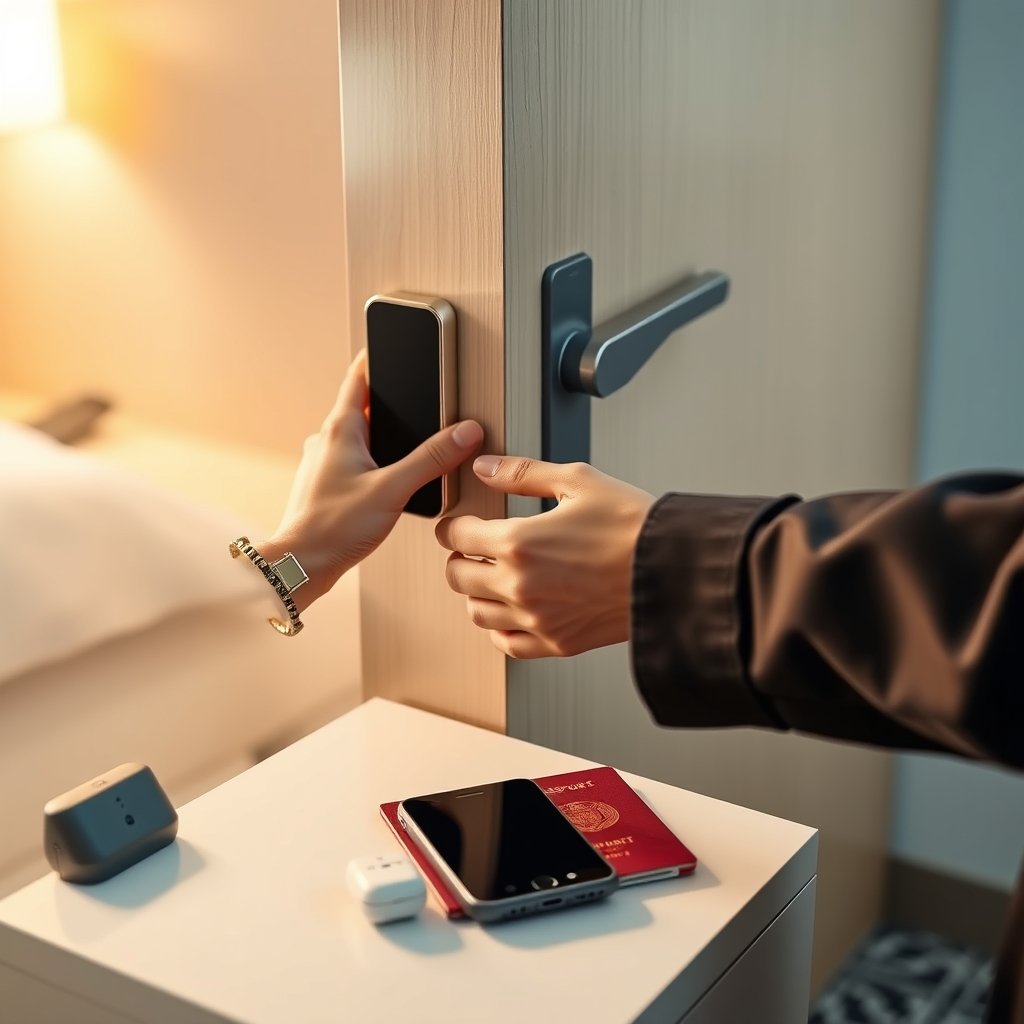
- Portable door alarm/lock for hotels and rentals (door lock buy guide)
- Travel SIM or global roaming eSIM—plus an analog, written trip plan for when cell service fails
- First-aid mini-kit—compact but includes emergency contact card
Still relevant: a small whistle for backup (it never needs charging), and a simple RFID-blocking pouch for passport/cards (detailed wallet breakdown).
How to Choose “Right” Safety Gear: 5 Buyer Rules
- Small/light for daily carry – If it doesn’t fit in your pocket or purse, you’ll leave it behind.
- Dual-use where possible – Power banks that double as flashlights, anti-theft bags usable both for day trips and city nights.
- User-verified reliability – Don’t trust just the ad: scan at least two recent review sources or forums per product before you buy, especially for devices like door alarms or locks.
- Discreet look and local fit – Avoid gear that shouts “tourist” or “defensive”—try smart jewelry or low-profile keychains (see self-defense keychain review).
- Easy to charge/maintain – If it uses obscure batteries or can’t be recharged with your phone’s cable, skip it.
Need a ready-made kit? See the Solo Female Travel Security Kit for a tested baseline.
Three Overlooked Safety Strategies for Smart Solo Travelers
- Pre-trip social anchor planning. Before departure, connect with a local expat group, women’s travel ambassador, or embassy social program (when possible). Knowing a face or voice—even via WhatsApp—can save hours in an emergency.
- Micro-route rehearsals. Use Google Maps’ Street View or mapping app “walkthroughs” to virtually rehearse routes from your accommodation to key sites, station, or hospital. This builds practical awareness so you’re never learning directions for the first time at night.
- Cultural nonverbal cues. Study five gestures or stances in the local culture that signal confidence or “not a target.” Practice these at home—a small detail, but it helps you blend in quickly.
Tip: Most guides never mention strategy #1 or #2—even though these small tweaks cut response time and reduce panic in real scenarios.
Price Expectations for 2024—What to Budget For
Because no single database provided exact price bands, the following ranges are based on editorial review only. Always check for real-time pricing.
- Power bank: $20–$70 (Anker, Aukey, RavPower)
- Personal alarm/whistle: $10–$50 (She’s Birdie, SABRE, Vigilant)
- Anti-theft daypack/neck wallet: $30–$150 (Pacsafe, Travelon)
- Portable door alarm/lock: $12–$40 (Addalock, TravelDoorLock Alarm)
- Travel SIM/eSIM: $8–$30 per week (regional/eSIM providers)
- First-aid mini-kit: $10–$30 (Welly, Adventure Medical Kits)
For more detail on affordable options, see the best travel safety gadgets under $30 guide.
Pre-Trip and On-the-Ground Safety Checklist
- Share full itinerary and local contacts with a trusted friend or family member
- Save emergency and embassy numbers on phone and on paper
- Test all alarms and locks at home—know how they work before arrival
- Back up ID and important documents digitally and physically
- Download offline maps and translator app
- Pack local SIM/eSIM and a backup charging cable
- Plan “meet-up” or fallback location for each city
- Practice at least one fast exit route in every new accommodation (stairs, door)
- Store valuables close at night and never leave them unlocked in rooms—consider a travel safe or neck pouch
- Be cautious but not paranoid: monitor drinks, trust instincts, and leave situations where you feel unsafe—no apology needed
For a complete, printable checklist, download the Travel Safety Checklist.
Advanced analysis & common pitfalls (what to expect, real challenges)
Common Pitfalls: What Actually Goes Wrong
- Complacency with tech: Overreliance on mobile safety apps means when batteries or local SIMs fail, travelers feel stranded. Carry a power bank and paper backups.
- False sense of security: Anti-theft bags and locks deter, but nothing is foolproof. Opportunistic theft and bag slashing still happen, especially in crowded transit.
- Cultural misfit: Overtly “defensive” gear may violate social norms or attract attention in conservative countries. Pick discreet, region-appropriate options.
- Product durability issues: The most frequent complaints in forum threads: dead batteries, broken zippers, alarms going off by accident, complicated resets. Read real review threads before purchase and always test at home.
- Attachment issues: Door locks or alarms don’t fit all doors—always check for compatibility and test with your accommodation if possible (see how to secure different doors guide).
Because no reliable forum sentiment study was found, these are editorial highlights based on regularly reported complaints and should be verified before purchase.
Quick Comparison: Pros and Cons of Top Safety Gear
| Gear | Pros | Cons |
|---|---|---|
| Power Bank | Critical for phone/app use anywhere, doubles as flashlight in some models | Can be heavy, must be charged often |
| Personal Alarm/Whistle | Instant, loud deterrent, needs no training, non-lethal | Alarm prone to accidental activation, whistle less effective in isolated areas |
| Anti-theft Bag | Slows down pickpockets, hidden zips, RFID pockets | Cannot stop “snatch and run” theft, can look touristy if not chosen discreetly |
| Portable Door Lock/Alarm | Secures hotel/Airbnb doors independently, easy install | May not fit all doors, some alarms too sensitive or not loud enough |
Emergency Resources: Creating Your Own Directory
No full international database exists for women’s safety and legal support abroad. Instead:
- Start with your national consulate’s travel site for safety/legal summaries and emergency numbers (e.g. US Department of State women’s safety page).
- Search local tourism board and embassy listings—seek women-specific helplines where listed.
- Record both police and medical emergency codes for each country before arrival.
- If traveling to a non-English-speaking region, write down polite versions of “I need help” and “Where is the embassy?” in the local language.
For mobile-ready safety, check out the best travel safety apps for women and combine digital resources with a simple printout in your bag.
Conclusion: Your move
Solo travel is safest, most rewarding, and least stressful when you build your system proactively—by blending smart gear, strategic planning, and the knowledge to adapt on the fly. This womens solo travel safety guide is just the start—pair the steps above with current info, keep your checklist handy, and update your plan for each new trip.
No stat or gadget can guarantee 100% safety, but with evidence-aware preparation and a bit of real-world skepticism, your independence and adventure don’t have to come at the cost of peace of mind. Ready to upgrade your kit or plan? Download the printable checklist or browse trusted gear picks now, and set your own standards before you go.
FAQ — Womens Solo Travel Safety Guide
Are solo trips actually safe for women, or is it too risky?
There’s no single answer. Actual public data on risk rates is missing for solo female travelers, but evidence shows that most trips are completed without serious incident when you use basic precautions and up-to-date safety gear. Major concerns come from perception rather than statistics.
What’s the #1 item women shouldn’t travel without?
In 2024, a power bank tops the list, since your phone is your lifeline for navigation, contacts, and emergency apps.
How can I make sure my hotel room is secure as a female solo traveler?
Test the door lock when you arrive, use a portable door lock or alarm (like those in the travel lock guide), and double-check exits. Never open the door to unverified visitors.
How do I research safe destinations and emergency help before my trip?
Check your country’s embassy site for specific destination guidance, list emergency numbers before you go, and use official travel apps. Adapt your plan using local advice and traveler forums before each city or region.
Are “women-specific” safety gadgets worth the extra money?
Not always. Some specialized products offer nothing extra over standard, well-reviewed essentials. Always read multiple reviews and check actual user feedback to decide.